Guests often check your site before they book
Many travellers find a hotel on an online travel agency (OTA) or a map listing, then visit the hotel’s own website to look more closely. They want better photographs, a feel for the place, details about rooms and a sense of whether booking directly is worth it. That visit is your chance to earn a direct booking.
OTAs are useful. They bring visibility and guests who would never have found you otherwise. The goal is not to replace them but to give people who are already interested a clear, trustworthy reason to book with you. A well-planned website can do that without a large advertising budget.
Your website also serves guests who have already booked. They return to check directions, restaurant hours, spa menus and activities. Making this information easy to find improves their stay and reduces messages to reception. It also keeps the website in their mind for the next trip, when they may book directly.
Sell the stay, not just the room
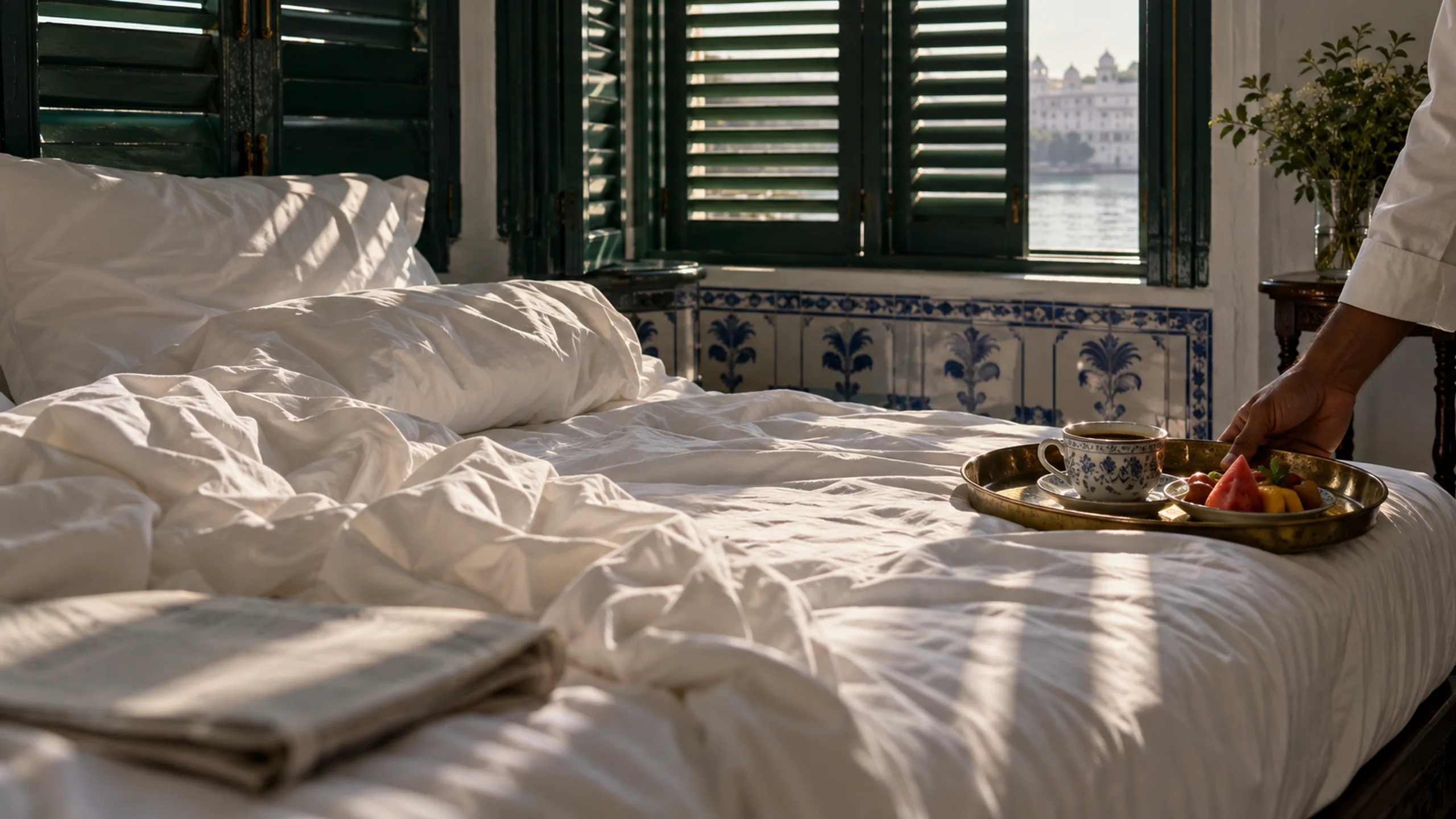
OTA listings tend to look similar: a grid of photos, a list of amenities and a price. Your website can tell a richer story. Show the setting, the experience of arriving, the food, the view from the balcony and the small details that make your property different. Write about the place in your own voice.
Organise this so it helps decisions. Each room type should have its own section or page with honest photographs, size, bed configuration, view, maximum occupancy and what is included. Guests comparing two rooms should be able to see the differences without opening five tabs.
Write room descriptions with the guest’s questions in mind. Is it quiet? Does it get morning light? Is the bathroom a shower or a bath? Can the beds be configured as twins? These details are often missing from OTA listings, and answering them on your own site is a simple way to show care and help the right guest choose the right room.
- Room pages with size, beds, occupancy and view
- Honest photographs of every room type
- The location and how to get there
- Food, experiences and nearby attractions
- Policies on check-in, cancellation and children or pets
Make booking direct obviously worthwhile
Guests book direct when it feels at least as easy and safe as an OTA, and ideally offers something extra. That might be flexible cancellation, breakfast included, a room upgrade when available, a welcome drink or a direct-booking rate where your OTA agreements allow it. Whatever you offer, state it clearly near the booking button.
Check what your contracts with OTAs allow before advertising rate differences. Many hotels focus on added value rather than a lower price, which is often simpler to manage and still persuasive.
Returning guests are one of the best sources of direct bookings. Invite them to book directly next time through the confirmation email, a note in the room or a simple returning-guest benefit. A guest who already knows and likes your property has little reason to go through an OTA if booking with you is easy.
The booking engine is part of the website
Most hotels use a third-party booking engine connected to their property management system and channel manager. Choose one that works well on a phone, shows real availability and prices quickly, and supports the payment methods your guests expect. A booking engine that feels slow or unfamiliar undoes the work of a beautiful website.
Keep the experience continuous. The booking engine should match the website’s style as far as possible, and the guest should never wonder whether they have left your site. Test the complete journey, including payment and the confirmation email, on a phone and on a slower connection.
- A ‘Check availability’ action visible on every page
- Dates and guest numbers remembered between steps
- Mobile-friendly payment with familiar options
- Clear total price, including taxes and fees
- An instant confirmation email with arrival details
Trust, speed and search
Guests are handing over payment details, so trust signals matter. Show your real address and contact details, a working phone or WhatsApp number, recent genuine reviews with permission, and clear policies. Keep certificates and security up to date so browsers do not show warnings.
Speed matters for both guests and search engines. Large hero videos and uncompressed photography are common causes of slow hotel sites. Compress images, load video only where it adds real value, and check performance with tools such as PageSpeed Insights. Keep your Google Business Profile and map listing consistent with the website.
Reviews on independent platforms carry weight, so link to them or display a selection with permission rather than relying only on testimonials you choose. Respond to reviews thoughtfully on those platforms too. Prospective guests often read how a hotel replies to criticism as closely as the praise itself.
Photography and video that set expectations
For hotels, photography is often the deciding factor. Invest in professional images of every room type, the public spaces, the food and the surroundings, taken in good natural light. Show what guests will actually experience. Over-edited images and wide-angle lenses that make rooms look twice their size create disappointment at check-in and poor reviews later.
Short video can add atmosphere, particularly for resorts and boutique properties: the sound of the sea, a morning on the terrace, the walk to the pool. Use it where it adds something photographs cannot, keep it short, and avoid loading large video files automatically on mobile. A poster image with a play button respects visitors on slower connections.
Languages, currencies and international guests
If many of your guests travel from abroad, consider which languages and currencies matter most. A full translation is a significant commitment, but translating key pages such as rooms, location and booking information can help. Show prices in a familiar currency where your booking engine supports it, and be clear about which currency the guest will actually be charged in.
International guests also need practical information: the nearest airport or station, transfer options, visa or registration requirements where relevant, and what to expect on arrival. A clear arrival guide, sent with the booking confirmation and available on the website, reduces questions and helps guests feel looked after from the moment they book.
Plan for seasons and offers
Hotels change through the year: seasonal packages, festivals, weddings, retreats and off-season deals. Plan a simple way to publish offers and landing pages without redesigning the site. Make sure expired offers are removed or clearly marked so guests are not disappointed.
Yupsilan designs hotel and travel websites that tell the story of the place and make booking direct easy. Whatever you build, compare your direct booking journey with your OTA listing on a phone; if yours is slower or less clear, that is the first thing to fix.
Weddings, retreats and corporate events often need their own enquiry route. Rather than sending these through the room booking engine, give each a short page with capacity, spaces, sample menus and an enquiry form. These bookings tend to be larger, and a dedicated page helps the right person respond quickly.